

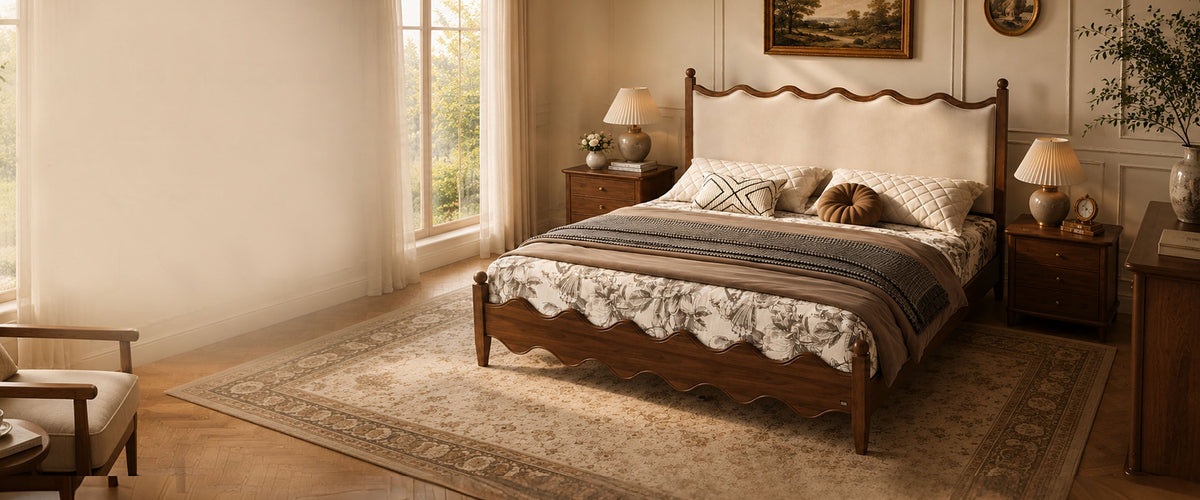
How to Style an Upholstered Bed as a Bedroom Focal Point
An upholstered bed can give a bedroom softness, scale, and architectural character in one piece. Because the headboard is often the largest vertical surface in the room, it naturally becomes a focal point. The challenge is to support that presence without surrounding it with so many patterns, materials, and accessories that the room loses its calm.
This guide answers one practical question: how do you style an upholstered bed as a bedroom focal point? The process starts with the bed’s silhouette, then moves outward to the wall, bedding, bedside furniture, lighting, and open space. The goal is not to match everything. It is to create a clear hierarchy in which the bed leads and the other elements support it.
Let the headboard establish the room’s visual direction
Begin by looking at the outline of the headboard. A straight, low-profile design creates a different mood from a tall or sculptural shape. Decide which feature should carry the most attention: the upholstery texture, the silhouette, or the contrast between the bed and the wall.
The Aveline Scalloped Upholstered Bed uses a gently waved headboard and footboard, giving the bed a distinctive outline. When a bed already has this level of shape, keep nearby furniture and wall decor simpler. Leaving visible wall space around the headboard allows the silhouette to read clearly instead of competing with a crowded arrangement.
Choose the wall before choosing the artwork
The wall behind the bed determines how strongly the upholstery stands out. A close tonal match can create a quiet, layered effect, while a darker or warmer wall can make a lighter headboard more prominent. Neither approach is automatically better; the decision should follow the room’s light and the visual weight of the bed.
Do not assume that every bed needs artwork above it. A tall or shaped headboard may already provide enough vertical interest. If you add art, measure the available area after the bed is positioned and choose a piece that does not crowd the headboard’s top edge. A little negative space often makes both elements feel more intentional.
Use bedding to support, not hide, the bed
Bedding is the largest changeable surface in the room. If the bed frame has a sculptural outline or visible upholstery, avoid layers that completely cover those details. Start with one dominant bedding tone, then add depth with a limited number of textures rather than several unrelated patterns.
A simple combination might include a smooth base, one textured throw, and a small group of pillows that repeats a color already present in the room. The bed should look comfortable, but the frame should still be visible enough to anchor the composition. This balance is especially important when the footboard carries part of the design.
Compare soft and structured focal points
Not all upholstered beds create emphasis in the same way. The Aveline Solid Ash Wood Upholstered Bed combines a visible wood frame with fabric upholstery. This gives the room two materials to work with: the softness of the headboard and the structure of the wood. Repeat the wood direction selectively in a bedside piece or frame rather than trying to match every surface exactly.
For a darker and more graphic approach, the Marlow Genuine Leather Upholstered Platform Bed is currently listed in black with queen and king options. A dark upholstered bed can define the room strongly, so lighter bedding and open wall space can keep the composition from feeling heavy. Review the individual product page for current dimensions and materials before planning the surrounding furniture.
Keep bedside furniture secondary
Nightstands should support the bed’s scale and daily use without becoming competing focal points. Measure the free space on both sides of the bed and consider drawer clearance, lamps, outlets, and walking paths. Two matching nightstands can create symmetry, but a smaller or single bedside piece may be more appropriate in a compact room.
If the headboard is curved or sculptural, bedside furniture with a quieter outline often works well. If the bed is more linear, a rounded lamp or small decorative object can soften the arrangement. Use contrast deliberately: one dark bedside element may frame a lighter bed, while related wood tones can connect an upholstered bed to the rest of the room.
Plan lighting around the headboard
Bedside lighting should make the room easier to use and help define the focal area after dark. Place lamps or wall lights where they provide useful illumination without covering the headboard or creating visual clutter. Check how shades, cords, and switches relate to the bed before finalizing the position.
Symmetrical lighting creates a formal, balanced look. An asymmetrical arrangement can feel more relaxed, but it should still have visual weight on both sides—perhaps a lamp on one side and a taller object or open wall space on the other. Test the room in evening light, when upholstery and wall colors may read differently.
Give the focal point room to breathe
A strong bed does not need every corner of the bedroom to be filled. Preserve clear paths around the frame and leave some open wall or floor area nearby. Negative space makes the main materials easier to notice and helps the room feel restorative.
For a broader view of current designs, browse the WinSpaces Beds collection, then return to individual product pages to confirm the exact size, materials, and options for your shortlist.
An upholstered-bed styling checklist
- Identify whether the headboard’s shape, texture, or contrast will lead the room.
- Leave enough wall space for the silhouette to read clearly.
- Use bedding layers that support rather than hide the bed frame.
- Keep bedside furniture proportionate and visually secondary.
- Test lighting and material balance in both daylight and evening light.
FAQ: styling an upholstered bed
Do I need artwork above an upholstered headboard?
No. A tall or sculptural headboard may already provide enough visual interest. Add artwork only when the available wall space supports it.
Should bedding match the upholstery?
It does not need to match exactly. Choose related or contrasting tones deliberately and repeat a small number of textures for a coherent look.
Can wood nightstands work with an upholstered bed?
Yes. Wood can add structure and warmth, especially when its tone is repeated selectively elsewhere in the room.
How do I keep a dark upholstered bed from feeling too heavy?
Use lighter bedding, preserve open wall space, and limit the number of other dark, visually dense pieces around the bed.
Final thought
An upholstered bed becomes a convincing focal point when the rest of the room knows when to step back. Let the headboard establish the direction, repeat materials with restraint, and protect the open space that makes the composition feel calm.
Next step: browse the WinSpaces Beds collection and compare the upholstered silhouettes that suit your bedroom plan.

Written by win spaces


Leave a comment
Este site está protegido pela Política de privacidade da hCaptcha e da hCaptcha e aplicam-se os Termos de serviço das mesmas.