

How to Choose a Sofa: Size, Layout & Material Guide
A sofa is often the largest piece of furniture in a living room, so the right one needs to do more than look good in a product photo. It should fit the room, support the way people gather, and leave enough space for daily movement. This guide answers one practical question: how do you choose a sofa that works with your layout, your routine, and your preferred style?
Start with the room, then decide on the seating configuration, compare the materials and dimensions shown on each product page, and think through special needs such as guest use or modular flexibility. Taking these steps in order helps you compare real options without assuming that one style is right for every home.
Measure the room before choosing a sofa shape
Begin with the usable area of the living room rather than the open floor space alone. Mark doors, windows, media units, radiators, and the paths people take through the room. A sofa that fits wall-to-wall can still make a room feel difficult to use if it blocks circulation or leaves no place for a coffee table.
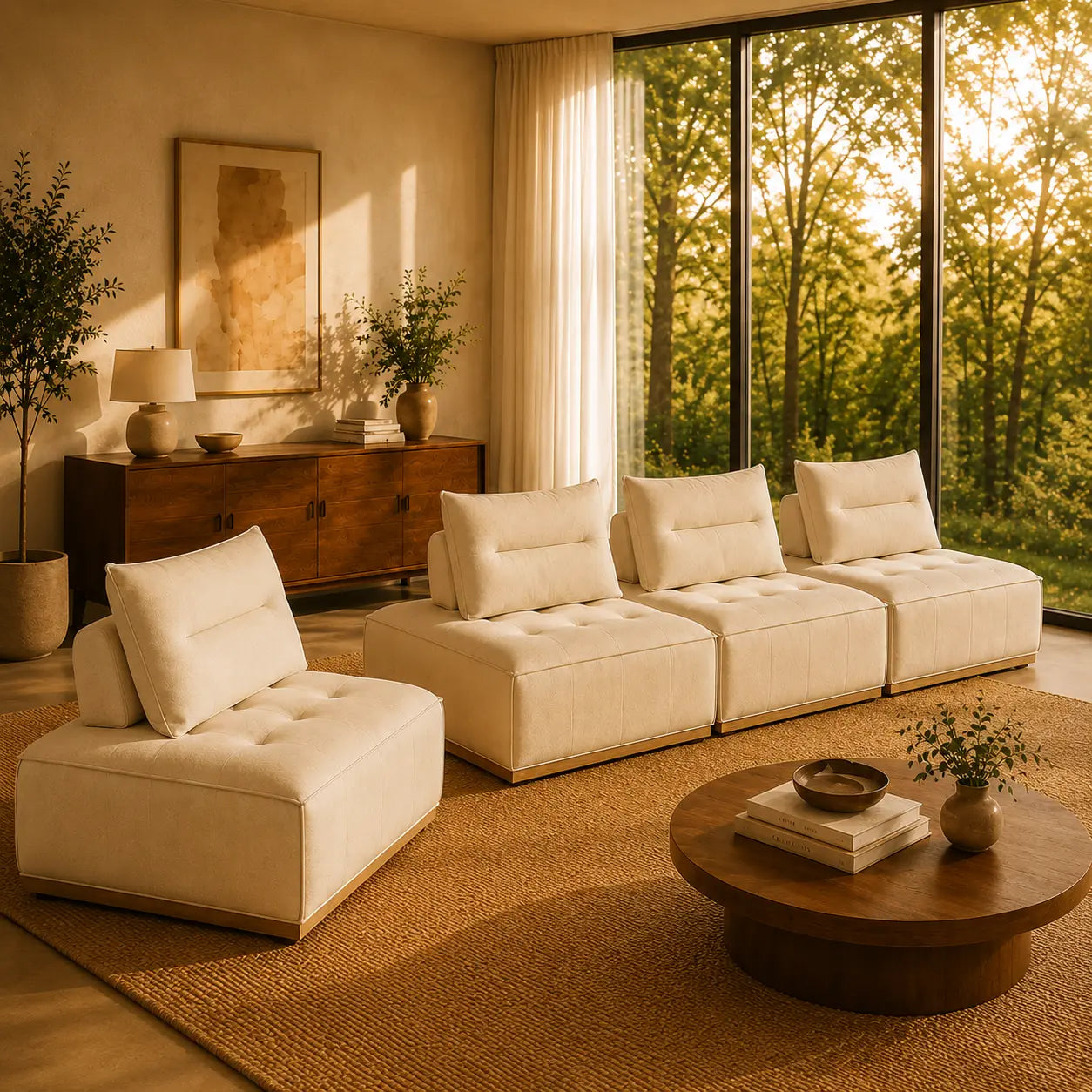
Write down the maximum width and depth that will preserve clear movement around the seating area. Then compare those measurements with the individual product pages. For example, the Lunora Modular Linen Fabric Sofa is offered in small, medium, and large configurations. A modular format can be useful when you want to choose a scale that matches the room instead of committing to one fixed footprint.
Do not treat a room’s overall square footage as the only measurement that matters. The shape of the room is equally important. Long, narrow spaces may benefit from a sofa that leaves a straightforward route through the room, while a wider open-plan area may have room for a larger seating arrangement. A simple floor plan is often the fastest way to see the difference.
Decide how many seats and what kind of layout you need
The best sofa layout depends on everyday use. Consider who uses the room, whether you host guests often, and whether you prefer one continuous sofa or a flexible arrangement. A two-seater, a larger three-seater, a sofa bed, and a modular sofa all solve different layout problems.
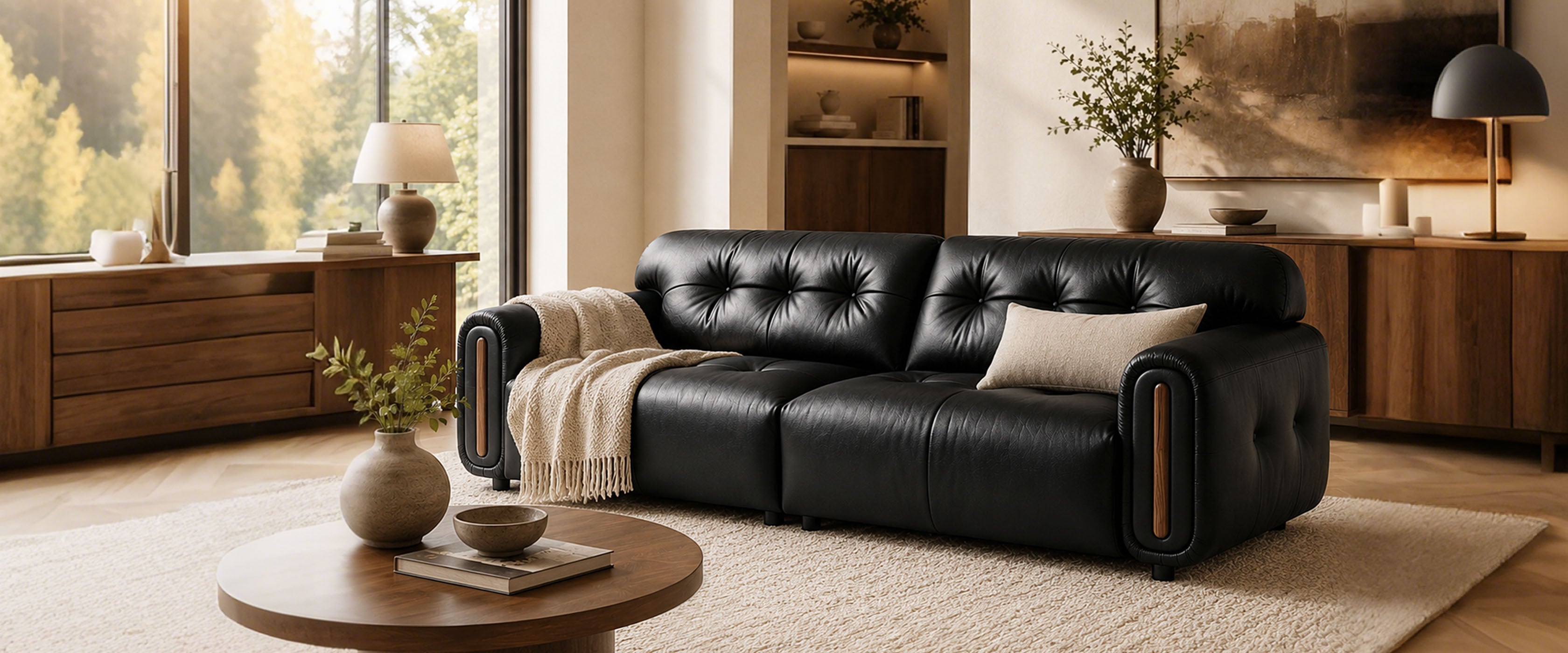
If adaptability is a priority, the Maren Nubuck Leather Modular Sofa is listed as a single module, which makes it relevant for shoppers who want to build a seating arrangement around their available space. If you are comparing a more conventional leather-sofa configuration, the Veyra Walnut-Frame Black Leather Sofa product page lists multiple seating and facing options. Review the selected option, not just the collection image, before deciding what will fit your room.
Think about how guests will face one another, where a coffee table will sit, and whether the sofa needs to define a zone in an open room. A larger configuration can be useful, but it should still leave a comfortable route between the seating area and the rest of the home.
Choose upholstery and visible details for your lifestyle
Material is both a visual decision and an everyday-use decision. Leather, linen-blend fabric, and upholstered options can create very different impressions in the same room. Start with the details listed on the product page, then compare them with the colors, textures, and maintenance expectations in your home.
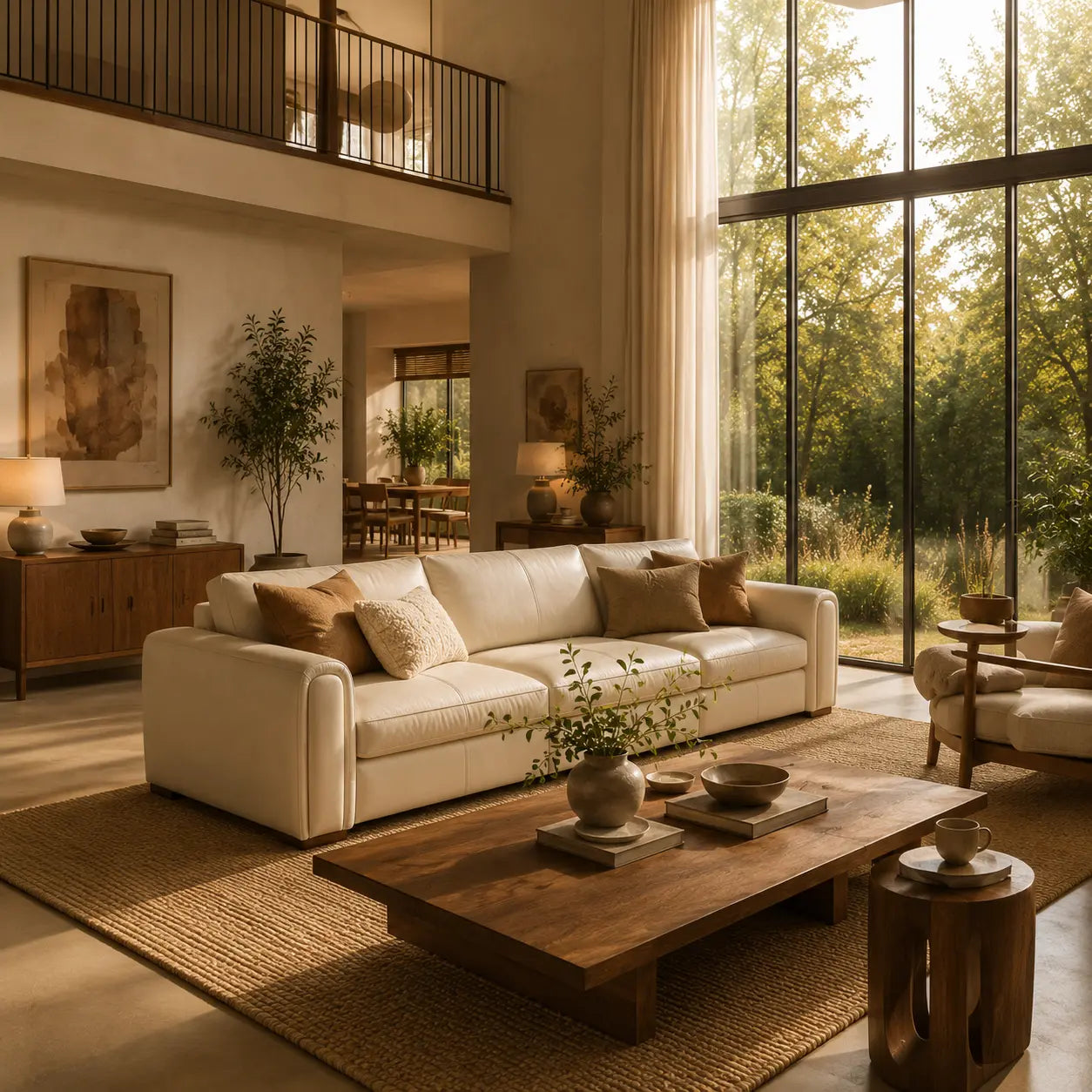
The Aurelius Modern Leather Sofa is listed as a leather sofa with several seating and recliner configurations. The Lunara Cloud Linen Sofa offers small, medium, and large options and is listed with cotton-linen upholstery. These are different starting points, not interchangeable categories. Compare the available configurations, the listed materials, and the scale of each option before making a decision.
Color also changes how a sofa reads in the room. A dark leather sofa can become a stronger focal point, while a light fabric sofa may make the seating area feel softer. Neither effect is universal. Check your flooring, walls, lighting, and nearby wood or metal finishes so the chosen sofa feels intentional rather than isolated.
Plan for guest use and changing routines
Some rooms need seating that can also support overnight guests or occasional extra functionality. If that is part of your plan, decide it before narrowing by color alone. A sofa bed should be compared as both seating and a convertible piece, with its available sizes and product-page details considered in the context of your room.
The Elara Pet-Friendly Leather Sofa Bed is listed with several size options. Use those listed options to check whether the sofa will work in its everyday position and whether the room has enough clearance for the way you intend to use it. A flexible piece only helps when its dimensions are workable in the actual layout.
It is also helpful to separate must-haves from preferences. For example, you may need a certain seat count or a space-conscious footprint, while the exact color can remain flexible. This prevents a visually appealing product from taking priority over the requirements that determine whether it works long term.
Use a complete living-room plan before you buy
A sofa is part of a larger arrangement. Add side tables, coffee tables, lamps, rugs, and media furniture to your rough plan. You do not need a detailed drawing; a few measurements can reveal whether the sofa leaves sensible space around the whole room. The goal is not to fill every open area, but to create an arrangement that remains easy to navigate.
For a broader view of current seating options, start with the WinSpaces Sofa collection, then return to each individual product page for exact configuration, material, and size information. The collection helps compare styles; individual pages provide the detail needed for a real purchase decision.
A four-step sofa checklist
- Measure the usable seating zone and the circulation paths around it.
- Choose the seat count, configuration, or modular approach that matches everyday use.
- Compare product-page dimensions, available options, and listed materials before selecting a style.
- Place the sofa with the other key living-room pieces on a simple plan to check balance and movement.
FAQ: how to choose a sofa
How do I know what sofa size will fit my room?
Measure the usable width and depth, then account for doors, tables, and walking paths. Compare those figures with the specific dimensions of the selected product option.
Should I choose a modular sofa or a fixed sofa?
Choose modular seating when flexibility in arrangement is important. A fixed sofa can be a straightforward choice when you already know the exact footprint and seating layout you need.
How should I compare leather and fabric sofas?
Begin with the materials listed on the product page, then consider the desired look of your room and your everyday preferences. Dimensions and configuration should remain part of the decision.
Is a sofa bed right for a small living room?
It can be, if the listed size works with the room in the way you plan to use it. Verify the specific option and leave enough clear space for your normal layout.
Final thought
A well-chosen sofa fits the room first, then supports the way you spend time there. Measure carefully, compare real product details, and let the seating layout guide your final style choice.
Next step: browse the WinSpaces Sofa collection and compare the options that fit your living-room plan.

Leave a comment
This site is protected by hCaptcha and the hCaptcha Privacy Policy and Terms of Service apply.