



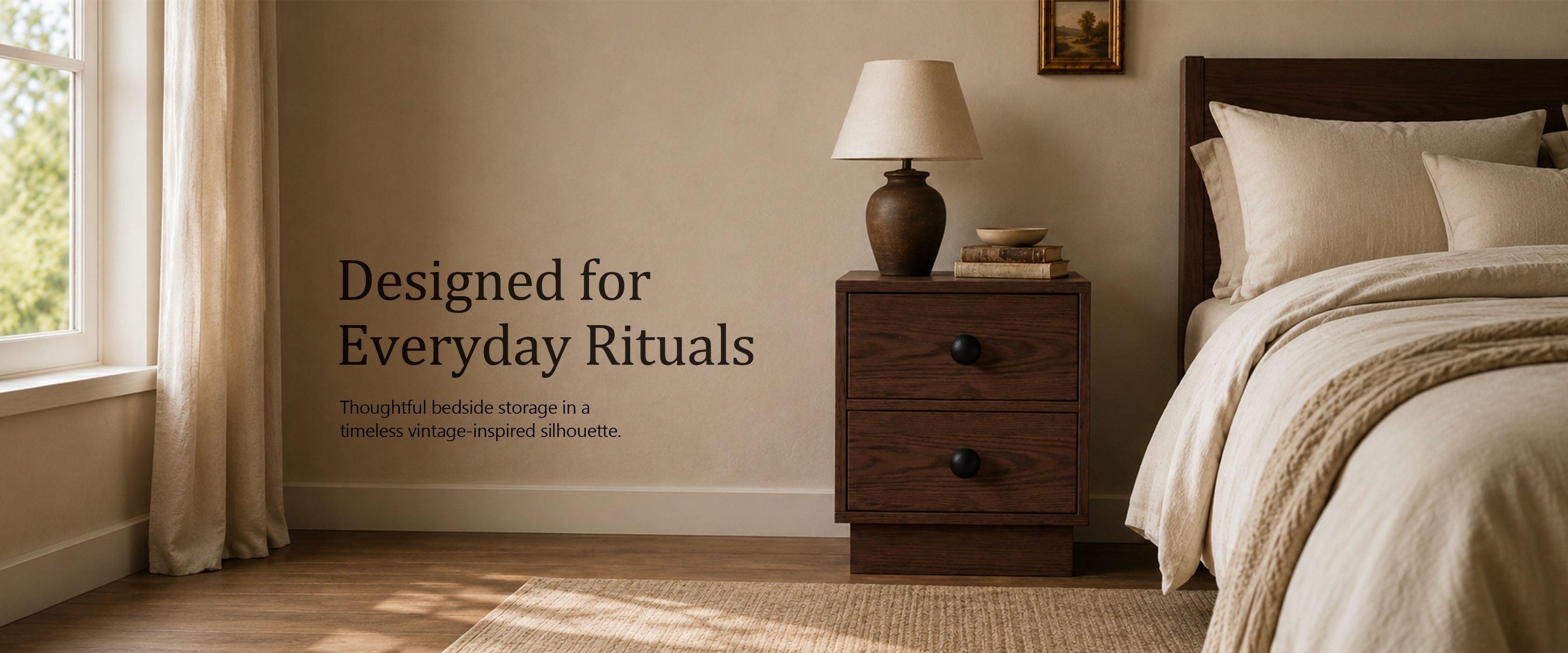
How to Choose a Nightstand for a Small Bedroom: Size and Storage Guide
In a small bedroom, a nightstand can either make the space feel easier to use or become the piece that interrupts every movement around the bed. The most successful choice is rarely the largest one or the one with the most features. It is the one that preserves a comfortable walkway, keeps bedtime essentials within reach, and feels proportionate to the bed and the room.
Before you choose a finish or a silhouette, take a few minutes to plan the practical details. The following framework will help you select a nightstand that works with the room you have—not an idealized version of it.
Start with the walkway, not the furniture listing
Measure the usable space on each side of the bed before deciding on a nightstand width. You need room to turn, make the bed, and reach the window or closet without squeezing past a cabinet. If one side of the bed is close to a wall, consider how a drawer will open and whether it could meet the bed frame, baseboard, curtains, or a nearby door.
For a quick reality check, mark the proposed footprint on the floor with painter’s tape. Walk around it at a normal pace and open the adjacent door or drawer. This small test often reveals more than a product photo can: a cabinet may technically fit, yet still leave the room feeling awkward to use.
Write down three measurements as you plan: the available width beside the bed, the preferred depth into the room, and the location of nearby outlets. These details help you filter options quickly and prevent a beautiful piece from becoming an everyday obstacle.
Match the bedside height to how you actually use the bed
A nightstand is easiest to use when its top is close to the top of the mattress. At that height, reaching for a glass of water, a book, glasses, or a phone feels natural while you are sitting or lying down. A surface that is much lower can require repeated bending; one that is much higher may look visually crowded beside the bed.
Measure from the floor to the top of the mattress, including any topper or deep bedding that changes the real height. Then compare that number with the dimensions listed on the product page. This is especially useful when a low-profile platform bed or a tall mattress changes the usual proportions.
Two identical nightstands are not always necessary. If one side of the bed is tighter, a smaller cabinet there and a more storage-focused piece on the other side can be a smart solution. Keep the tops at a similar height and repeat a key material or color to make the arrangement feel intentional.
Choose storage around your bedtime routine
Instead of asking, “How many drawers do I need?”, list what you use at the bedside every day. A lamp, phone, glasses, reading material, and water glass often belong on the top. Small items you prefer to keep out of sight—such as charging cables, hand cream, or a journal—may be better stored in a drawer. Less frequently used items should not take over the most convenient space.
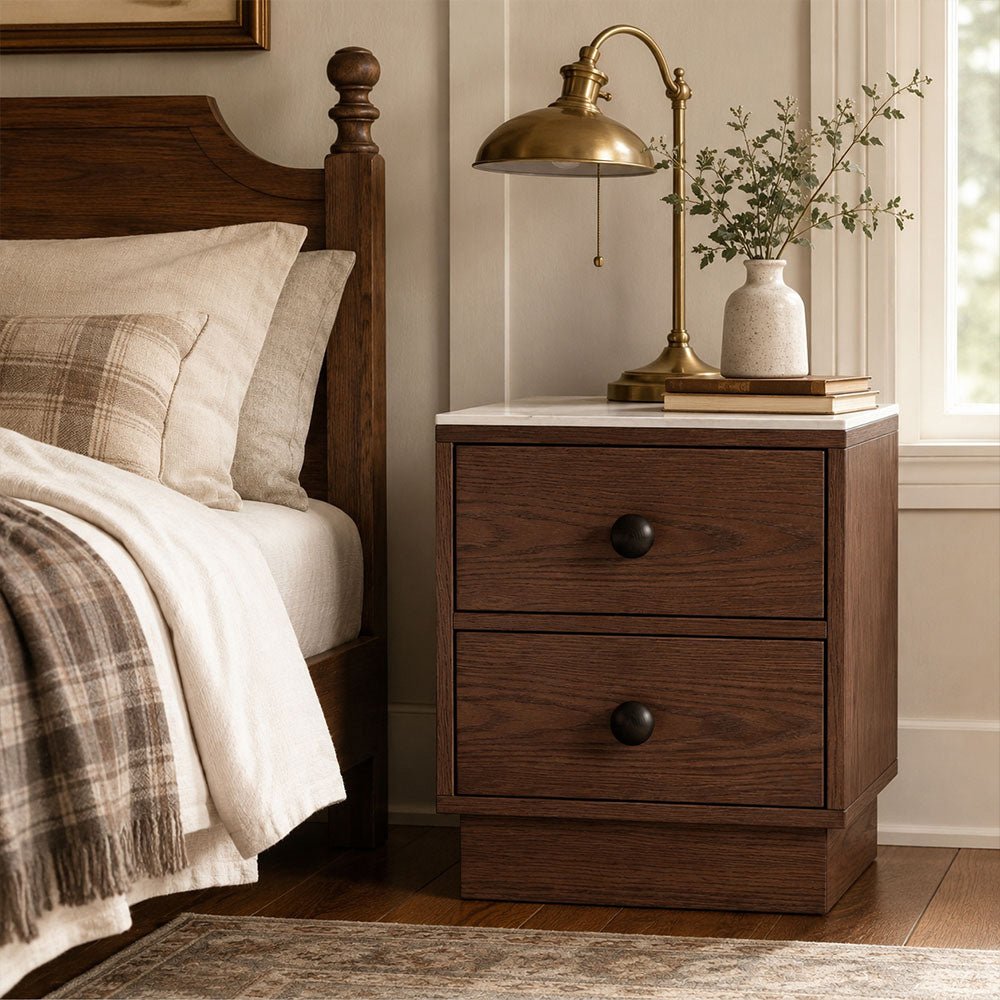
This approach helps you avoid both extremes: an open surface that becomes cluttered and an oversized cabinet that stores more than the room needs. A two-drawer design can be useful when you want the top to stay clear while keeping daily essentials nearby.
WinSpaces currently offers several two-drawer options, including the Alden Two-Drawer Solid Wood Nightstand, the Nora Solid Wood Nightstand, and the Veyra Two-Drawer Sintered Stone Solid Wood Nightstand. Review each product page for current dimensions and details, then compare them with your measured space and the items you want to store.
Think about the top surface as a working zone
The top of a nightstand supports many small habits: setting down a book, placing a glass of water, charging a phone, or switching on a reading lamp. Consider how much clear surface you truly need and where the outlet sits. If cords will cross a walkway, a smaller surface or a different placement may make the room feel calmer and safer to navigate.
Materials and finishes matter here as well, but they do not need to match every other piece exactly. In a compact room, repeating one or two visual anchors—such as a warm wood tone, a dark accent, or a soft neutral—usually creates more order than introducing many competing finishes.
A three-minute checklist before you order
- Confirm the available width and depth beside the bed.
- Check how drawers will open in the actual room.
- Compare the nightstand height with the top of your mattress.
- Plan which items stay on top and which items need concealed storage.
- Locate outlets, curtains, baseboards, and doors that could affect placement.
- Review the current dimensions on the product page before making a final decision.
Build a bedside setup that supports rest
A well-chosen nightstand makes the bedroom easier to live in at the beginning and end of every day. Start with your measurements and movement through the room, then choose a storage layout that fits your personal routine. When you are ready to compare styles, explore the WinSpaces Nightstands collection and use your room measurements as the final filter.

Leave a comment
This site is protected by hCaptcha and the hCaptcha Privacy Policy and Terms of Service apply.